Tuesday, January 21, 2014

Final Thoughts

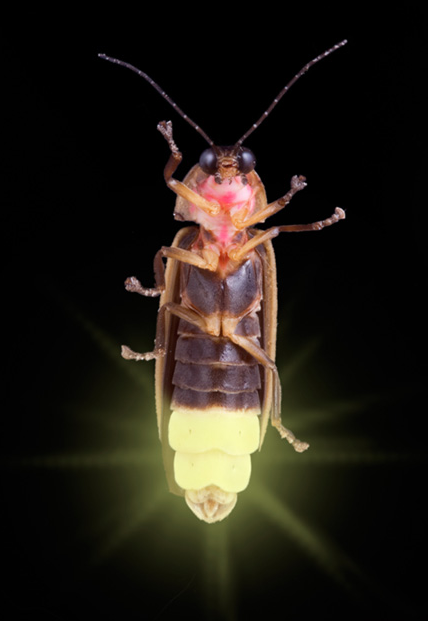
My thoughts on insects have not changed too terribly much. I still find them a little terrifying; if one were to land on my shirt or crawl on my skin I would flip out, though there are some exceptions to that statement, such as the butterfly or firefly. I still find cockroaches REPULSING and will probably still kill them with insecticides and/or squishing them due to the fact that there is very little short of a nuclear bomb that can take them out. 
Moth collection we pinned in class
I will say, however, that I now see their usefulness more now than I did before. I feel that they are useful in our food web; what we eat eats them, so how can I hate something that ultimately feeds me. They pollinate the plants for us, which we desperately need to survive. Some also eat other insects that are considered pests to us humans, which is a use that I thank them for.
Overlook at Ruffner Mountain
I also know WAY more about insects now. I have a lot of useful information that I can keep with me as I grow older and encounter more bugs. I know that not all 'flies' are actual flies and have a cool trick on differentiating between the two. I also now know that butterflies and moths are in fact insects, which I was not sure of before. So basically I have a new favorite insect, though fireflies still come in a close second place. 
I greatly enjoyed the trips we took outside of the classroom. They were enjoyable and a change from being in a classroom constantly was very nice. It is also something that was initially out of my comfort zone, but I have found that if the hike is not too steep, the view is absolutely worth it.
Overall I would say my tolerance for insects has increased. I had little to none before and now, though I do not have a whole bunch, I have more than I did. If someone asked me if they should take this class, I will tell them yes, and I have honestly enjoyed the Jan term class more than any other class I have taken.

Butterflies, Oh, Butterflies

Photo found here
I was not impressed with Evan's chapter about butterflies in his book we were supposed to read for class. Like not impressed in the least bit. There is so much useful and interesting facts that he could have elaborated on to give the "ever day people" reading his book more information on the majestic creatures that most people enjoy seeing, or are not completely freaked out by. To be quite honest, butterflies are probably one of the more liked species of insect around the world. To me they seem majestic and beautiful, and I would not freak out if one landed on me. 

Photo found here
I decided to look at a website on some butterfly facts (find website here). I read some stuff that I mainly already knew, such as how butterflies use camouflage and their coloring as defense mechanisms. They also use chemicals to protect themselves from predators. I found out that a caterpillar's first meal is it's own egg case, which is actually very interesting and not what I figured it would be. It also states that there are about 17,500 species are butterflies, so it is hard to know an exact number of how many there really are. Monarchs and some other species can migrate thousands of miles, while most others migrate short distances, and they live on all continents except for Antarctica. 

Photo found here
I also enjoyed the reading we did out of Laufer's book (chapter 7, found here). I found it rather interesting to find out that butterflies main reason for extinction is habitat loss. This is a sad thing to think about: 50 years ago in most places butterflies were way more abundant. To think that our expansion of technology and building more is destroying their habitats and homes is a very sad thought. This has also set up butterfly gathering/hunting to be illegal in many different parts of the world. People can go to jail for capturing butterflies. The thought never even crossed my mind. "What did you do to land in the big house?" "Just captured a few butterflies.." doesn't seem like a very reasonable answer or even an answer that would be real; when in actuality it is very real. 

All in all, butterflies are the most majestic of insects of me. I would have added them into my first post, but I was not sure if they would even be considered an insect. Good thing I have taken this class and now know that I do, in fact, have a favorite insect. 

Starbucks Strawberry Frappucinnos Contain Beetle Juice?

Photo found here
So I read in the Berenbaum book about how the "yogurt beetle" was a myth, finding out that this red coloring she talks about is not technically a "beetle," but actually a different insect all together. When writing my 'Entomophagy' post I was looking up pictures to post on the blog. I ran across a picture that led me to this blog post. The blog discussed how red cochinea beetles are used to produce red and pink food coloring in different foods. It discusses the process of how the coloring is attained (through cooking fertilized eggs at degrees of 212 F). It also talks about how the coloring is used in make-ups, and lists many of the different foods it is used in. People are believed to buy brighter colored foods, thinking they are going to be more healthy and overall better for people. In the ingredients, however, there is a different name that is used than what the actual ingredient is; it is known to the world as "carmine" or Crimson Lake, Cochineal, Natural Red 4, C.I. 75470, or E120. But why are industries allowed to use these names instead of what these things actually are? People assume that other people would not want to buy a food that has bug eggs in them. Can you really blame them?

The vegan/vegetarian question is also called into question when issues such as this one occurs. Though I feel that people who want to lead this lifestyle should be very careful and read all of the ingredients on their foods, it is very hard to know that "carmine" is bug eggs unless it is looked up, which people should obviously do if they do not want to consume anything with a mother or that moves. 

However, this does not bother me as much as consuming a full grown insect, or even an insect that has hatched or is in the next stage of life. All in all, though, I would still rather not consume any insects, though I know that wish will never ever come true.

Entomophagy

Photo found here
As most of y'all know I am not one who particularly likes insects. I wouldn't say that I hate them all, but for the most part they gross me out and make me feel uncomfortable. While I know they are vital to our living and to keep the food chain and the world running smoothly, I could personally honestly live without a good majority of them. There are some exceptions to this statement, but not many make the list.
However, I find it surely safe to say that I would eat insects only in the most dire of circumstances. If all of the food that I eat currently was to run out and I could only survive by eating insects I suppose I reluctantly would, but that would be out of simple desperation. I find it absolutely repulsing that there are laws that allow it to be okay for insects to be in our food. I understand how it is virtually impossible for insects to stay out of our food, but the thought of it being okay that insects are in our food is an idea that makes me feel rather uneasy and sketched out about eating food prepared by others or even buying foods from grocery stores. I know I would never survive without the grocery store or eating out, but I would rather have not found out this fact.
I do not believe that I could ever have insects as a crucial role in my diet. I feel that no matter how they tasted I would never be able to consume them with any enjoyable feeling. I do not believe that I would ever try them on any circumstance unless someone was going to offer to pay off all of my loans or to buy me a house or something of that sort. Those would probably be the only two situations in which I would even try one. Ultimately, I do not believe that I will be eating any insects INTENTIONALLY in my life, though I'm apparently going to consume millions in my lifetime, unintentionally.  

Saturday, January 18, 2014

Evans Ch. 10-13

I was having difficulties getting these videos cut right and my e-mail was making it very difficult to make sure they were all in order. If they do not make sense I apologize; these are the best way I can get them. Each video of each chapter is a continuation of me talking, I just had to slice the video up because it would not send as one long video for each chapter. Thanks.

Chapter 10
video 1
video 2
video 3

Chapter 11
video 1
video 2
video 3
video 4

Chapter 12
video 1
video 2
video 3
video 4

Chapter 13
video 1
video 2
video 3

Tuesday, January 14, 2014

Hike at Ruffner Mountain

Gall found in parking lot
Today we visited the Ruffner Mountain Nature Preserve located a few minutes away from school. At the beginning of our trip we searched for insects in the parking lot located near the "Back Porch" at Ruffner Mountain. We found many different insect life: galls of different sorts, crickets, and ants. We found three or four different types of galls and it was very interesting to see how different types of galls are implemented by different insects. I also learned that depending on the insect there can be one specimen per gall, or sometimes multiple specimen inside each gall. We also encountered a bird's nest that we though was a wasp nest.
Overlooking the Overlook
The next part of our trip we spent hiking up the mountain. The hike went rather fast due to the time constraints we had; we were not able to stop and thoroughly look for insect life, but we did stumble upon tree limbs where beetles had laid their eggs inside, chewed the twig to where it was almost unattached from the tree until it had fallen to the ground. As Dr. Van Zandt was explaining the process to us I found it to be rather interesting and actually pretty cool that a beetle could do all of that. 
Cave we explored 
We continued to climb up the mountain enjoying each others' company until we came to the quarry that the trail leads to. The quarry was very interesting and pretty. However, the Overlook was the most beautiful sight on the hike. Vulcan and the skyline (though small) of Birmingham were visible. The view definitely made the hike worth it at the end. After we found the Overlook we ventured into a small cave hoping to encounter insect activity inside. Unfortunately, no insects were to be found today. I did however learn that limestone is soluble with rainwater and ultimately breaks apart due to the rains we experience. I also learned that the cave remains a constant temperature all year around, summer or winter.
Though we did not find all of the insect life we were hoping for I greatly enjoyed the trip to Ruffner Mountain. I really needed the sunshine and air that I received  while hiking. I greatly approve of this location and feel that it is a better choice for this class than a trip to Turkey Creek.

Misconceptions

Picture was found here
The misconception that I have heard the most about was the fact that cockroaches could survive ultimately anything. All in all this freaked me out. I mean I suppose if there was a nuclear was or something of that sort and my land was affected it really would not matter if cockroaches could survive due to the fact that I would not be around any longer to encounter them. The thought of this did give up all hope on ever getting rid of them and keeping them out of my life. They are stuck with me forever and I have to accept that, though I doubt I ever will.

I had no idea that so many other insects and bacteria could actually survive more radiation and overall more than cockroaches actually could. I also did not realize how relatively new the information on cockroaches ability to endure radioactivity actually was. There is much more information that dates further back on insects such as different beetles, weevils, moths, and the bacterium Deinococcus radiodurans who are more likely to survive that cockroaches. 

I looked up this link to find some more information on the myth of cockroaches being able to survive anything. This link discusses how the myth began when cockroaches were the only survivors after the atomic bomb drops on Hiroshima and Nagasaki. It also discusses how the Mythbusters did an experiment to see how much this myth would actually hold up. They found that cockroaches could withstand an atomic bomb and radioactivity, but only to a certain extent. I believe that this would be a good thing to possibly discuss in the chapter of this book to have something that more people could relate to (most people know of or have seen Mythbusters and may have even seen the given episode).

All in all cockroaches are not something I want to be able to survive anything. Knowing that there is enough radioactivity to get rid of them is comforting even though I would more than likely not be around to experience the glorious day.

Monday, January 13, 2014

First Days In The Field

Our first day in the field capturing bugs was a very beautiful day. We traveled down to the lake; the weather was very nice, the sun was shining, and the experience was overall very enjoyable. We found more insects than I honestly inspected to encounter. The first larvae we captured were found in the plants called cattails. These cattails were very messy, and as we were looking through them to find larvae their leaves (I suppose that is what they were) were scattered everywhere. Of course I was located downwind from everyone and all of the cattail mess landed on my black pants and fuzzy purple jacket. This part of the experience was not the best part, but was bearable in order to see 
the larvae that were seeking warmth inside. Other people found cocoons to use for their insect collection. I believe cricket cocoons and moth cocoons were retrieved and are going to be usable for the project. Overall we found some life and spent a nice day outside in the good weather.

The second day we traveled to the forest
of the Ecoscape on campus. The weather was not as good as the previous day, but it was not the 9 degree weather that we experienced a few days prior. More life was found in this area in comparison to the lake. Beetles, earwigs, beetle larvae and other larvae were found fairly commonly. One find that was rather disturbing to me was the spider nest that was found. You could see the little spiders crawling around and all that I could imagine was these things crawling all over me (yes I know spiders are not insects...). We also found a centipede and a millipede and we discussed why in fact these were not acceptable to use in our collections. After these encounters I found myself staring more at the trees and their beauty rather than actually looking for insects (some people may not know this but I have this weird obsession with trees, not really their names or types or certain traits about them, but generally staring at them and acknowledging their beauty). All in all our two visits have been very interesting and have led me to learn more about insects and where they stay during the winter.  


Sunday, January 12, 2014

Interesting Insects

Jiminy Cricket figurine found online at Disney.com
Many of the insects discussed in Evan's Life on a Little-Known Planet are very interesting, while others simply are not. One that I found very interesting were the crickets discussed in Chapter 5. Many times I have heard crickets chirping in my life, and I never associate this sound with anything other than my good pal Jiminy Cricket. It was nice to learn new information about these interesting creatures. For example, it really hit me that these amazing sounds they produce come from them rubbing their wings over the other. I always knew that but I really imagined it on an actual cricket after reading this, rather than picturing Jiminy with an awkward instrument that produced these sounds that fill my summer nights. I also learned that these animals are ambidextrous in how they produce their music, by either overlaying the right wing on to the left, or vice versa. I never have really associated ambidexterity with any creature other than a human before. It also discussed how katydids are not ambidextrous and if they are right-winged they are unable to sing at all due to the lack of development of the right wing. I learned of all the many songs that males have in their arsenal and what they are used for, along with the fact that crickets ears are located as disks near their front leg joints. I was also introduced to the idea that theoretically you can tell the termperature by listening to crickets songs, and also that a katydid sang along with the clicking of a typewriter. All of this stuff was not stuff I was expecting to find out and was very cool information to learn. 

The crickets mating instincts were also discussed in this chapter. I learned that male crickets spend more time in one stationary place and that they find female crickets to mate with by playing their songs. The females move around more and seek out the males in order for mating to occur. I read that a blinded female can find a male cricket just as well as a female that can see, showing that sight and smell are not involved in the behaviors expressed by the female when in pursuit for the male cricket. And I finally learned that the calling songs are what keep the crickets from interbreeding with crickets of different species. A song of one species in a certain temperature will never match the same call of another species in the same temperature. 
Photo found here

The most interesting thing I learned from this chapter involved the Chinese and the cricket fighting they would act in. They came up with special diets, rules tournaments to battle male crickets against one another. I have heard of cricket fighting and even dog fighting, but I would have never imagined cricket fighting to be a popular sport in which money was exchanged and won. It also showed how crickets were a sign of luck or of much importance to the Chinese. I think a good thing that would be interesting to add to the book might be to elaborate more upon the fact that crickets were considered very good luck and were really worn around China everyday by the people. I learned this through the Disney movie Mulan, which I am a total fan of (I also always wondered why she was given a cricket "just for luck" to visit the matchmaker... I guess now I know!). 

Tuesday, January 7, 2014

On Being A Cold Bug

Bugs endure much during winter and the cold months. They use different approaches to try and live through the winter months so the can continue their lives during the more desirable months. Having to live in these months outside in the cold is a thought I do not enjoy thinking about. Simply walking to class in 9 degree weather is absolutely miserable. Being in this weather constantly day and night would be the most uncomfortable thing I can think of.

Me icing my arm at Emory after pitching 2 games
The coldest I remember being in recent times was February of last year. We went to Emory for a softball tournament and it was freezing cold. Snow was covering the field and we played two games on a Saturday and Sunday. I have issues playing in Under Armour. I can't pitch and play games in it, so I was pitching and sleeveless during these two days. I had Hot Hands taped to my forearm because it was knotting up and impossible for me to throw. Needless to say it was not my best tournament.

If I was an insect and I had to choose a life stage in which I would want to spend my winter, I would choose to live it as nymph or pupa so that I could sleep through the winter and literally not do a thing. If I could sleep through the winter as a human I honestly believe that I would. As an insect I would want to freeze in the pupa stage and then thawing out and repeating this cycle over and over again for years, like the Gynaephora caterpillar. I do not think I could supercool myself and then try to avoid freezing from icicles and things. I also feel that the Asian Ladybird beetles trying to invade people's homes and dying due to lack of food, water, and the dry air would be a bad idea to try. I feel that plan of attack is the least productive option out of all of the options we discussed during class.  

Meeting Bugs and the Madagascar Hissing Cockroach

The first actual day of class was very interesting. We did normal things at first, like discussing our readings and the video that we were assigned for homework and then casually were introduced to Madagascar Hissing Cockroaches. Alive. Hissing. Six of them in all. They were being passed around the room and as anyone who read my previous post could have guessed my anxiety increased dramatically during all of this. Cockroaches (though not these types in particular) are my least favorite. ABSOLUTELY DETEST THEM. 
Photo taken by Wallace Fairvalley

As these were being passed along I learned a great deal about them. For example, I learned that only male cockroaches hiss. The hissing comes from them breathing in and out through their abdomen. I also learned that they are very good at holding onto things with their legs. Their legs are like the rough part of velcro, as Dr. Van Zandt informed me, and hold on the irregular surfaces, like the ridges of fingers, extremely well. I also learned that though these certain types of cockroaches do not spread diseases, other types in fact do and people can also be allergic to cockroaches. Needless to say, I learned a whole lot about an animal that I did not care to learn more about. It is nice knowing that the diseases these creatures carry are not extremely harmful like the flu or the bubonic plague. 

The drawing of moth antennae and head
After this adventure, we shifted class downstairs to the lab area. We were going to spend the remainder of the class looking at dead bugs under microscopes to learn more about their body features and also to look at them more intricately. This was at times gross but then became an easier task to endure. Though I stayed looking at bugs I did not have as much of a problem with, I'd say I opened my eyes a little bit more to bugs and insects. We had to illustrate a specific trait of one of the bugs we were looking at. I decided to draw a particular moth head and antennae that I looked at. Though I am not an amazing artist by any stretch of the imagination, I believe that I looked at the insect more intricately and learned a lot about moths that I did not know before. 

First off, I learned that they have scales that cover their wings and body. I was convinced that these scales were hair. They looked fuzzy and exactly like hair I have seen on other mammals. I also learned that male moths of a certain species can pick up two hormones from a female of the same species and can use their antennae to locate the female. I found this to be unbelievable and honestly pretty stinking cool. 

Overall class today was interesting and enjoyable. Hopefully the cockroaches do not find their way back in the classroom anytime soon!


Photo credit: All photos added today were taken by my except for the first picture of the Madagascar Hissing cockroach, which was taken by Wallace Fairvalley which I pulled and used from her Instagram. 

Friday, January 3, 2014

Thoughts On Insects

Insects are not something I am particularly interested in or that I know much about. If you gave me a list of bugs I would probably categorize half of the given options wrong. If I see a bug 9 times out of 10 I consider them all the same. Insect is not a term I use. Bugs and spiders are about as categorical as I get. I do know that spiders are arachnids and technically not insects, but that is about all that I know.

After watching the "Bug Bits" video I realize that I am very creeped out by bugs, but I do know some information about them, like how they have three body segments and six legs. Other than that I am moving into a completely unknown world and I am hoping to gain a new view on insects. I want to understand more about their uses and hopefully gain better insight into their world and how they live. I want to not be creeped out by bugs so that if I see one in my apartment I will be able to capture it and let it out freely rather than spraying bug spray and killing it.

I will let y'all know that some bugs I can deal with. Ladybugs and lightening bugs are insects (if both of those even are insects) that I can handle and deal with. I also played with rolly pollies as a child, but feel as if I have outgrown that state and would not be interested in playing with them at this time.

Now, here are some insects I can not deal with. First of all, I HATE COCKROACHES. To add the picture of this one on to my blog has literally given me chills. They are all over my apartment and I cannot stand them. AT ALL. These are the bugs I am referring to that maybe one day I will be able to capture and release them versus killing them with spray or squishing them. I also am not fond of ants at all, either. The itchy bumps they leave from bites are the main reason I do not like them. Also, my best friend is allergic to them so anytime they are anywhere near us I am worried she is going to get stung and I will have to stick her with her epi-pen. This causes me, and her as well, great anxiety.


All in all I am hoping to learn the importance of insects in order to accept them a little more. I am terribly freaked out by them and they make my skin crawl for the most part.